
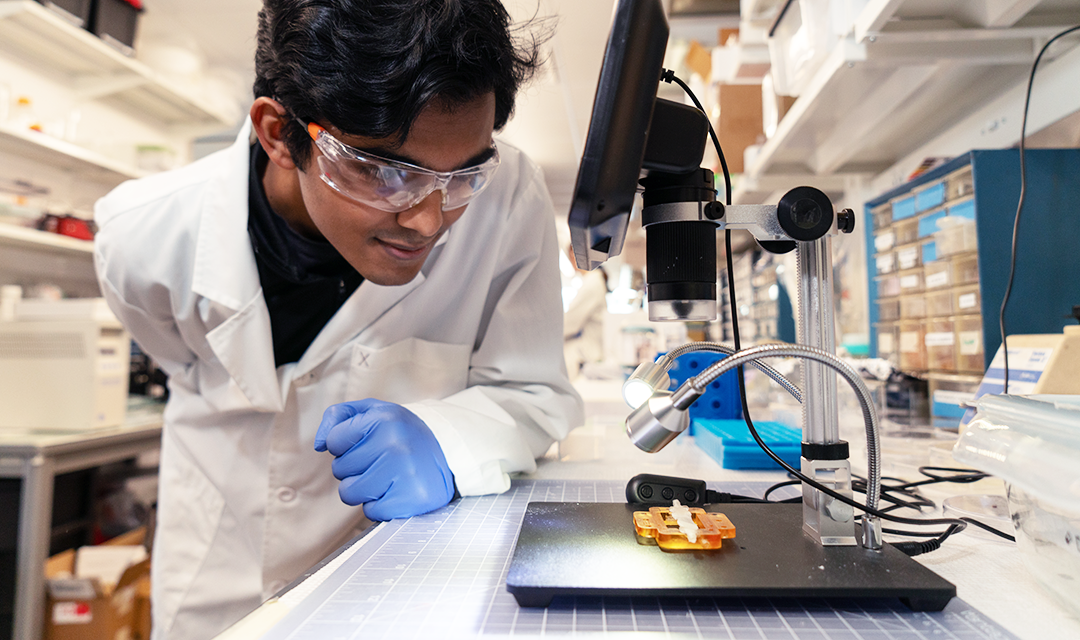
At Carnegie Mellon University, we are not just predicting the future of healthcare; we are creating it. Driven by CMU’s renowned culture of interdisciplinary collaboration, our Biomedical Engineering (BME) graduate programs bring together visionary students, top-tier faculty, and world-class researchers to pioneer life-changing biomedical technologies. Whether your ambition is to lead disruptive R&D in industry, launch a high-impact biotech startup, or advance cutting-edge academic research, CMU BME provides the flexible curriculum, clinical access, and technical rigor to turn your vision into reality.
Why students choose CMU BME
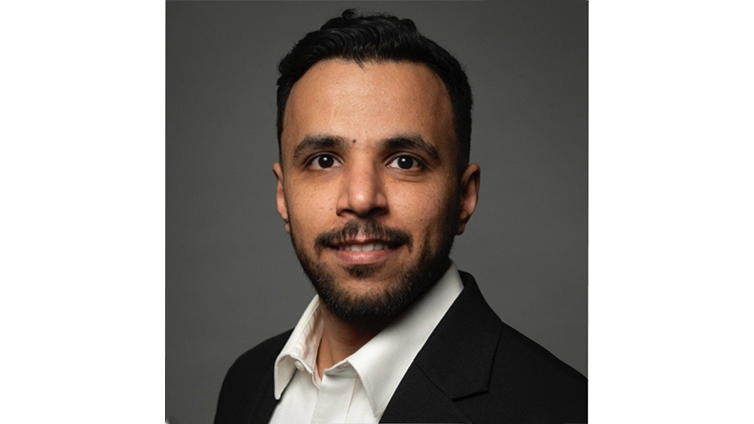
“Through my Ph.D., I am developing both deep technical expertise and the ability to lead increasingly independent research. I have gained experience in experimental design, engineering system development, data analysis, scientific communication, interdisciplinary collaboration, and mentoring other students. I have also had opportunities to present my work, attend conferences, collaborate with researchers from different backgrounds, and take greater ownership of research projects. These experiences are helping me develop the technical, communication, and leadership skills needed to contribute to high-impact biomedical research, whether that is in an academic laboratory or an industry R&D environment.”
- Mohammad Algarni, Ph.D. student

“What makes CMU BME unique to me is the combination of academic and research excellence with a genuinely tight-knit and collaborative community. You have access to faculty doing cutting-edge research and opportunities to work across engineering, science, and medicine, while still being in a department where people know one another and students receive individualized support. CMU offers an environment where you can become a strong independent researcher without feeling like you have to succeed alone. There is a strong culture of collaboration, and people are willing to share their expertise and help one another. For me, that combination of rigorous research, interdisciplinary opportunities, and community is what has made CMU BME such a meaningful place to train.”
- Suji Shin, Ph.D. student
Master’s programs
Advance your career in healthcare innovation with a Master of Science in Biomedical Engineering at Carnegie Mellon University. Designed to align with your specific professional goals, our flexible degree pathways combine rigorous coursework across five core bioengineering focus areas with opportunities for hands-on clinical practicums, original research, and dual-degree study. Graduates leave prepared to lead in biotechnology, medical device development, healthcare R&D, or to pursue continued doctoral study.
Explore BME's master's programs
Ph.D. programs
Become a leader in biomedical innovation with Carnegie Mellon’s fully funded Ph.D. in Biomedical Engineering. Designed for ambitious scientists and engineers, our doctoral program offers a balance of in-depth research specialization and interdisciplinary breadth. From your first semester, you will collaborate with world-class faculty on impactful thesis research, supported by comprehensive financial aid covering tuition and stipend. The typical Ph.D. completion timeline is 4–5 years. An M.D.-Ph.D. pathway is also available through the joint program with the University of Pittsburgh Medical School. Regardless of program, CMU provides you with the technical expertise and independent research skills to address urgent health challenges across academia, industry, and entrepreneurship.
Learn more about BME’s Ph.D. programs
Graduate admissions
Carnegie Mellon University’s Department of Biomedical Engineering (BME) welcomes applicants from diverse quantitative, technical, and scientific backgrounds. Admission decisions are based on a holistic review of your academic performance, research experience, recommendations, and personal statement.
Eligibility and preparation
- Degree requirements: Applicants must hold a bachelor’s degree from a recognized 4-year college or university in engineering or a science-related discipline (including computer science, biological and medical sciences, physics, chemistry, or mathematics).
- Foundational knowledge: Candidates should demonstrate strong quantitative skills or a background in the life sciences.
- GPA conversion: If your undergraduate institution does not use a standard U.S. 4.0 GPA scale, convert your GPA using World Education Services (WES) before entering it into the online application. Your uploaded transcripts may remain in their original scale.
- Integrated CMU students: Integrated Master’s/Bachelor’s (IMB) Program: CMU students can find more information on applying for the IMB Program on the undergraduate programs page.
- M.S. to Ph.D. transition: Current or former CMU M.S. students seeking entry into the Ph.D. program must apply through the general Ph.D. application pool. Ph.D. admissions are competitive and depend on available research funding and capacity in your area of interest.
Application requirements
All application materials must be submitted through the official CMU online application portal. Applicants should create only one account to prevent review delays.
- Online application and fee: A non-refundable $75 application fee is required at the time of submission. Fee payment cannot be deferred, and applications will not be reviewed until paid.
- Statement of purpose: Submitted directly within the online application.
- Letters of recommendation: Three letters of recommendation must be submitted online directly by your referees before the deadline. A brief grace period of a few days is permitted for late arrival without impacting committee review, provided all other materials are complete.
- Transcripts: Upload unofficial transcripts from all attended post-secondary institutions for the initial application review. Official transcripts are required only upon matriculation and should be mailed to:
Graduate Admissions
Department of Biomedical Engineering
Carnegie Mellon University
Scott Hall 4N119
5000 Forbes Avenue
Pittsburgh, PA 15213
Standardized testing and English language proficiency
- GRE General Test (optional): GRE scores are optional for all BME graduate programs. Unsubmitted scores will not negatively impact holistic review. Applicants who choose to submit scores can use the ETS codes listed below.
- English language proficiency: Required for all non-native English speakers. Standardized test scores must be valid (taken within two years of application). Applicants holding a previous degree from a U.S. institution may submit previous TOEFL, IELTS, or Duolingo scores.
| Test | Minimum Score Requirements | Institution Code | Department Code |
|---|---|---|---|
| GRE | Optional | 2074 | 1603 |
| TOEFL (iBT) |
86 Total (Reading: 22, Listening: 22, Speaking: 20, Writing: 22) *BME does not accept TOEFL MyBest Scores. Applicants must meet the minimum total and section score requirements from a single TOEFL test date. |
2074 | 69 (Engineering Other) |
| IELTS |
7.0 Overall Band *BME does not accept IELTS One Skill Retake (OSR) scores. Applicants must submit scores from a complete IELTS test taken in a single test session. |
N/A | N/A |
| Duolingo (DET) | 105 Total (Literacy: 105, Comprehension: 115, Production: 70, Conversation: 96) | N/A | N/A |
For assistance with test scheduling and score reporting, visit ETS.org or call ETS at 1-800-529-3590.
Financial aid and program funding
Ph.D. programs
- Full funding guarantee: Full-time Ph.D. students receive full tuition coverage and a competitive living stipend regardless of financial need upon admission. Continuation of support is contingent upon satisfactory academic and research performance, evaluated each semester.
- External funding: Students receiving external fellowships or awards that match or exceed departmental support do not receive additional funding. If external awards are lower than the standard stipend, the department provides supplemental funding to match standard levels.
- Funding duration limits:
- Direct Entry (BS to Ph.D.): Funding supported up to 14 semesters (including summer terms)
- Advanced Entry (MS to Ph.D.): Funding supported up to 12 semesters (including summer terms)
- Extensions: Petitions for per-semester funding extensions beyond these limits are reviewed on an individual basis
Master’s degree program
While M.S. programs are primarily self-funded, limited financial support opportunities exist:
- Summer research aid (M.S. Research Track): High-performing first-year students may receive summer research funding based on competitive review of course grades and laboratory progress.
- Teaching assistantships (TA): Paid TA positions are periodically available based on course needs, student qualifications, and academic performance. Non-native English speakers must meet university language requirements.
- Research assistantships (RA): Second-year M.S. students may be offered paid RA positions directly at the discretion of their faculty research advisor.
- Campus employment and loans: M.S. students can seek part-time campus employment via CMU’s Handshake portal or apply for student loans through CMU Enrollment Services.
International student guidelines
- Visa processing and I-20: Admitted international students will receive instructions from the Graduate Program Administrator to submit visa documentation directly to the Office of International Education (OIE). Processing takes several weeks; track your document shipment to confirm delivery. OIE will notify you via email when your I-20 is issued.
Review process and application tracking
- Status tracking: Monitor receipt of supporting documents and decision updates through your online application portal. Allow 3–5 business days for staff to process incoming materials.
- Committee review policy: Admission decisions are made by faculty committee consensus evaluating research fit, capacity, and overall qualifications. Department staff and individual faculty cannot assess credentials or estimate admission probabilities prior to formal review.
Admissions resources
- Faculty research directory: Explore the BME faculty directory to identify potential research advisors and departmental research areas.
- Program rules and policies: Consult the BME Graduate Student Handbook for the full set of academic rules and milestones.
- International support: Visit the CMU Office of International Education (OIE).
- Inquiries: Direct unaddressed technical application questions to bme-grad@andrew.cmu.edu.
Graduate program resources
For additional resources, visit BME’s graduate student portal (log in required)