
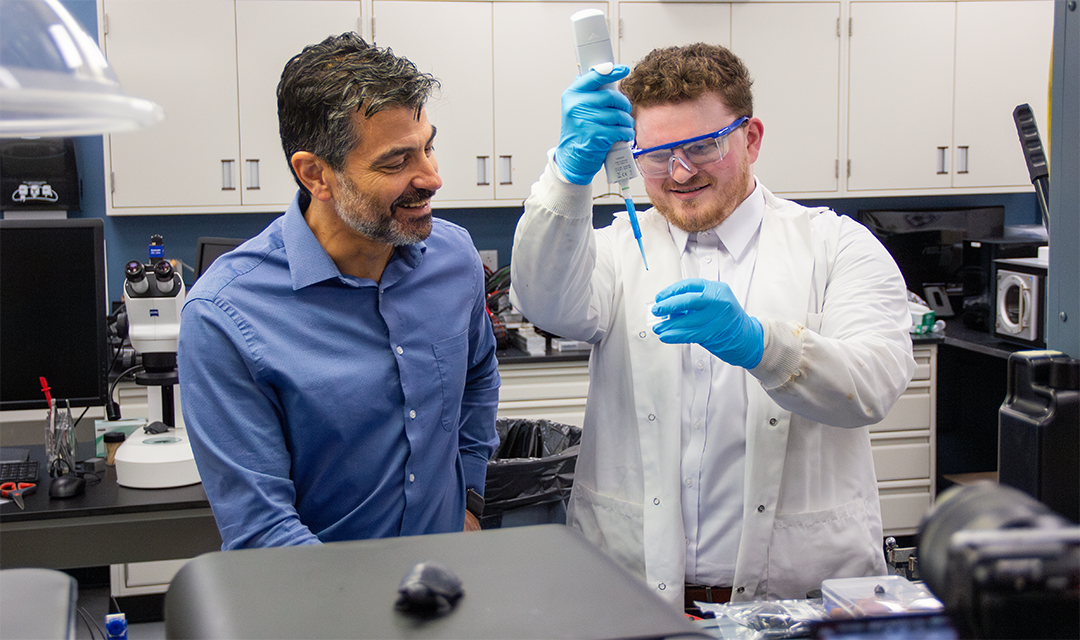
Carnegie Mellon University's Ph.D. in Biomedical Engineering prepares curious, driven researchers to advance the future of healthcare through groundbreaking discoveries. Combining rigorous interdisciplinary training with early immersion in research, the program empowers doctoral students to pursue original investigations that span engineering, biology, computation, medicine, and artificial intelligence.
From the first weeks of the program, students join a research group, work closely with world-class faculty, and develop the expertise to solve complex biomedical challenges. With a flexible curriculum, individualized mentorship, and guaranteed financial support for admitted full-time students, the program provides an exceptional foundation for careers in academia, industry, government laboratories, and entrepreneurship.

Ph.D. pathways
Carnegie Mellon's Biomedical Engineering Ph.D. offers multiple pathways designed to accommodate students at different stages of their academic journey while providing the same rigorous research experience and faculty mentorship.
Direct Entry Ph.D.
Students entering directly after a bachelor's degree complete at least 84 units of coursework while beginning research during their first semester. With a balance of advanced coursework and immersive research, most Direct Entry students complete the program in four to five years of full-time study.
Advanced Entry Ph.D.
Students who enter with an approved master's degree can focus more quickly on research while completing 42 units of additional coursework. Because previous graduate study satisfies part of the degree requirements, many Advanced Entry students complete the Ph.D. in approximately four years.
M.D. - Ph.D. program
In partnership with the University of Pittsburgh School of Medicine, Carnegie Mellon offers a combined M.D.-Ph.D. pathway for future physician-scientists. The program integrates clinical training with advanced biomedical engineering research, preparing graduates to bridge medicine and engineering to develop innovative healthcare solutions.
Students apply through the University of Pittsburgh School of Medicine and later enter Carnegie Mellon's Ph.D. program while completing their medical education. Research may begin as early as the summer before medical school, providing an early start on doctoral research. The Ph.D. portion of the program is designed to be completed in approximately three to four years before students return to finish their medical training.
Funding and student support
As one of the nation's leading graduate engineering programs, Carnegie Mellon seeks exceptional doctoral students and is committed to supporting their success. All admitted full-time Ph.D. students receive comprehensive financial support—including tuition, fees, and a competitive stipend for the duration specified in their admission offer, contingent upon satisfactory academic progress.
Students also benefit from a structured mentoring and annual review process designed to support steady progress toward degree completion. This combination of financial support, faculty mentorship, and ongoing guidance enables the vast majority of Carnegie Mellon Biomedical Engineering doctoral students to successfully complete their Ph.D.