
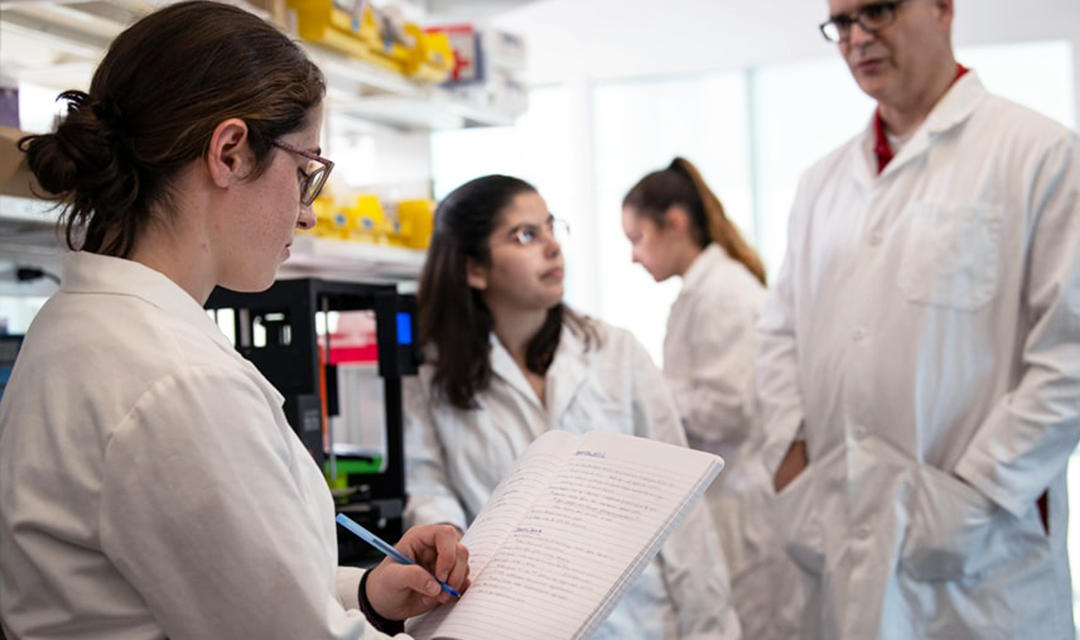
Transforming healthcare requires more than engineering expertise; it requires close collaboration with clinicians, researchers, and patients. At Carnegie Mellon University's Department of Biomedical Engineering, students and faculty work alongside leading healthcare professionals to identify clinical challenges, develop innovative technologies, and translate engineering discoveries into real-world medical solutions.
Through partnerships with Allegheny Health Network (AHN), Mayo Clinic, and the University of Pittsburgh Medical Center (UPMC), Carnegie Mellon Biomedical Engineering integrates clinical perspectives into education and research. These collaborations provide students with opportunities to learn from practicing physicians, participate in clinically inspired research, and gain firsthand insight into how biomedical technologies improve patient care. Faculty collaborators also work together to advance research that addresses pressing challenges in medicine and healthcare.
Clinical experiences across every degree
Clinical collaboration is woven throughout the Biomedical Engineering curriculum. From undergraduate design projects to doctoral research, students engage with clinicians and healthcare researchers who help shape classroom learning, mentor research projects, and provide valuable clinical perspectives throughout the engineering design process.
Undergraduate clinical experience
Undergraduate students work with clinicians throughout their academic experience, applying engineering principles to real healthcare challenges.
Students have opportunities to:
- Collaborate with clinicians serving as mentors for Biomedical Engineering Capstone Design projects
- Participate in the Biomedical Engineering Summer Undergraduate Research Program (BME SURP), where teams identify unmet clinical needs within hospital settings that can inspire future capstone projects
- Learn from physicians and clinical faculty through courses such as Medical Devices and Surgery for Engineers, which explore the application of engineering in modern medicine
Graduate clinical experience
Master’s and Ph.D. students build deeper clinical and research collaborations through faculty- and clinician-mentored projects that connect engineering innovation with patient care.
Graduate opportunities include:
- Clinically focused research projects
- Clinical mentorship, committee participation, and patient access that support doctoral research
- Courses taught by clinicians that explore topics such as medical devices and surgery from an engineering perspective
Clinical and research partnerships
Carnegie Mellon Biomedical Engineering collaborates with leading healthcare organizations to expand research opportunities, strengthen engineering education, and accelerate the translation of new technologies into clinical practice.
Allegheny Health Network (AHN)
Through the Allegheny Health Network Research Institute at Allegheny General Hospital, Carnegie Mellon Biomedical Engineering faculty have access to pre-clinical research facilities that support collaborative biomedical engineering research.
Mayo Clinic
Carnegie Mellon and Mayo Clinic have established the Transforming Transplantation Initiative, a collaborative effort to expand access to organ transplantation and improve transplant outcomes through engineering innovation. The partnership supports graduate student research, shared funding opportunities, and a joint research seminar held every two weeks for faculty, students, and staff from both institutions.
Learn more about the CMU–Mayo Clinic collaboration
University of Pittsburgh Medical Center (UPMC)
Carnegie Mellon and UPMC maintain a broad range of educational and research partnerships. Together, they offer the Medical Scientist Training Program (M.D. - Ph.D.), share neuroscience and brain imaging facilities through the Center for the Neural Basis of Cognition (CNBC) and the Brain Imaging Data Generation & Education (BRIDGE) Center, and collaborate through the Pitt/CMU Pulmonary Engineering Consortium, where engineering students and clinical trainees conduct research across both institutions. Additional collaborations include faculty participation in the McGowan Institute for Regenerative Medicine and the shared Biomechanics in Regenerative Medicine (BiRM) training program.